
The use of robotic surgery, or robot-assisted surgery, is a technique increasingly being adopted by surgeons in the UK. The robot is a tool that allows the surgeon to move instruments with more precision; the surgeon makes the movements, the robot does not operate independently.
Trial summary
Aim
The aim is to assess differences between robotic and laparoscopic surgery for surgical outcomes (duration of surgery), clinical outcomes (how fast you recovery, postoperative pain, complications) and we will measure your quality of life in questionnaires.
Study design
This is a single-center, randomized controlled trial.
Study population
The study population encompasses all adult patients with benign gallbladder disease (gallbladder polyps or symptomatic gallstones proven on imaging).
Standard of care
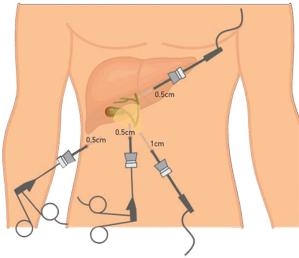
Laparoscopic cholecystectomy: Laparoscopy is a term for keyhole surgery of the abdomen. This keyhole surgery can be performed in the conventional way, where the surgeon holds the instruments. The surgical resection (removal of the gallbladder) is called a cholecystectomy.
Intervention
Robotic cholecystectomy: Laparoscopy can also be performed with a robot holding the instruments, where the surgeon moves the instruments using a console. This is also called robot-assisted laparoscopy.

Outcomes
The primary outcome is the comparison in total complications within 30 days between patients treated with laparoscopic cholecystectomy and robotic cholecystectomy. Other outcomes of interest are intraoperative outcomes, recovery, morbidity, patient satisfaction, and cost-effectiveness.
Number of patients (sample size)
A total of 276 patients will be randomized to undergo either laparoscopic or robotic cholecystectomy.
Timeline
We anticipate that the trial will last 12 months. During the first 7–8 months, patients will be enrolled and treated, followed by a maximum follow-up period of 1 month. The remaining time will be used for data analysis and manuscript preparation.
What participation involves
Participation in this study involves randomly allocating participants to undergo their planned cholecystectomy with either robotic surgery or laparoscopic surgery.
Participation requirements
Participation requires you to do the following in addition to normal care around your procedure:
Fill out questionnaires (online or over the phone) about your health and quality of life before surgery, 7 days after surgery and 30 days after surgery.
Why participate?
Benefits from participation in this study cannot be guaranteed, however the study aims to further medical knowledge, and through participation, greater treatment options in the future may help other patients with gallbladder problems.
 STaRLING Trial